
Neutrinos are one of the fundamental particles which make up the universe. They are also one of the least understood.
Neutrinos are similar to the more familiar electron, with one crucial difference: neutrinos do not carry electric charge. Because neutrinos are electrically neutral, they are not affected by the electromagnetic forces which act on electrons. Neutrinos are affected only by a "weak" sub-atomic force of much shorter range than electromagnetism, and are therefore able to pass through great distances in matter without being affected by it. If neutrinos have mass, they also interact gravitationally with other massive particles, but gravity is by far the weakest of the four known forces.
Neutrinos can travel through the Earth without interacting with a single atom, thus most of them leave no trace. To increase the likelihood of observing the extremely rare interaction of a neutrino with matter, physicists build massive detectors and record the detectable particles that emerge from the rare collisions of neutrinos with atoms inside the detector.
Thus trying to understand this elusive particle is expectedly one of the most interesting and active fields of research in particle physics today. A whole host of "Neutrino Detectors" have been/are being commissioned to help us peel through the mysteries of the universe. This leads us to wonder how are scientists detecting neutrinos which are so weakly interacting? How do Neutrino Detectors Work?
The Three Major Families of Detectors
There are essentially three types of detectors, according to the energy or origin of the neutrino we want to detect:
- Detectors for solar neutrinos: Solar neutrinos have an energy between 0 and 20 MeV, depending of the type of solar nuclear reaction they come. Underground, undersea or under the ice, the detectors made for them detect either the Cerenkov light emitted when a neutrino interact with the water (like Kamiokande or Super-Kamiokande) either the transformation of atoms under neutrino interaction, the remaining atom being radioactive: Chlorine 37 coming from Argon in the Homestake experiment, or Germanium 71 coming from Gallium like in GALLEX experiment.


(The Super KamioKande Experiment Water Tank)
- Detectors near nuclear plants: The anti-neutrinos coming out of nuclear reactors are emitted in great quantity and have a mean energy of 4 MeV. The neutrino detector uses the inverse beta decay reaction ( (anti-neutrino + proton --> neutron + anti-electron) to detect anti-neutrinos. It detects the photons emitted when the neutron is absorbed by matter and when the anti-electron coming from the neutrino interaction annihilates with an electron of matter. This detection type was used by Reines et Cowan experiment for the first detection of neutrino in 1956, by BUGEY, by CHOOZ, etc.

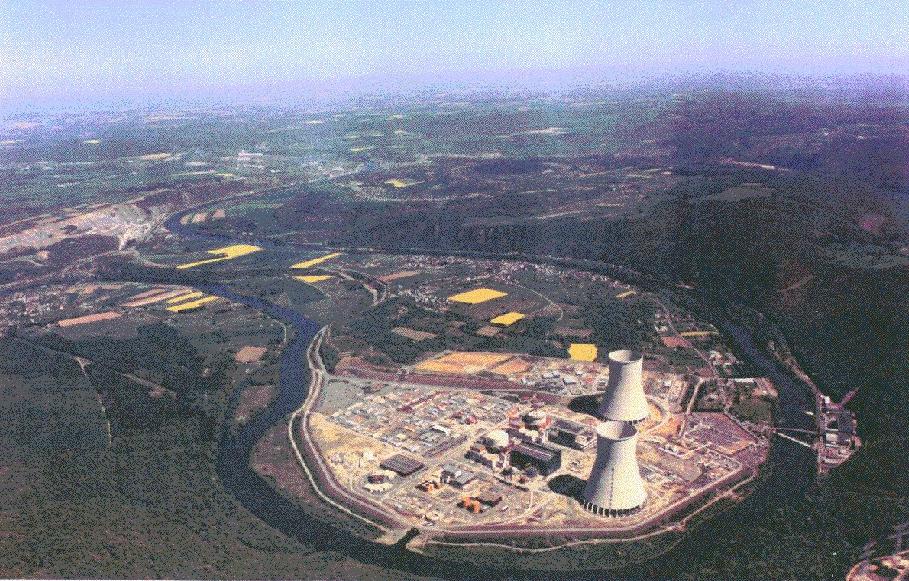
(The CHOOZ Nuclear Reactor)
- Detectors with neutrino beam: Nowadays, neutrinos generated by accelerators have an energy of some 10 MeV to some 100 GeV. The detectors in this case identify the particles coming out of the high energy neutrino interaction with a proton, a neutron or an electron of the detector matter. The neutrino beams are produced using a proton beam coming from an accelerator and sent against a Beryllium target, then filtered through a great amount of dense matter (lead, concrete, iron, earth). This detection type was used by the Brookhaven experiment which discovered the nu_mu neutrino in 1962, by CHARM II experiment in 1974, by NOMAD or CHORUS experiments in 1995, etc.

The MicroBooNE Experiment
The Neutrino Theory
Neutrinos are omnipresent in nature such that in just one second, tens of billions of them "pass through every square centimetre of our bodies without us ever noticing." Despite this, they are extremely "difficult to detect" and may originate from events in the universe such as "colliding black holes, gamma ray bursts from exploding stars, and violent events at the cores of distant galaxies". There are three types of neutrinos or what scientists term "flavors": electron, muon and tau neutrinos, which are named after the type of particle that arises after neutrino collisions; as neutrinos propagate through space, the neutrinos "oscillate between the three available flavors." Neutrinos only have a "smidgen of weight" according to the laws of physics, perhaps less than a "millionth as much as an electron."

The three different Neutrinos
Detection Mechanisms
The detection mechanisms applied b the various detectors is as follows:
- Scintillators: Two scintillation detectors (detectors that can detect photons by illumination) are placed next to the cadmium targets. Antineutrinos with an energy above the threshold of 1.8 MeV will then cause charged current "inverse beta-decay" interactions with the protons in the water, producing positrons and neutrons. The resulting positron annihilation with electrons creates pairs of coincident photons with an energy of about 0.5 MeV each, which could be detected by the two scintillation detectors above and below the target. The neutrons were captured by cadmium nuclei resulting in delayed gamma rays of about 8 MeV that were detected a few microseconds after the photons from a positron annihilation event. This experiment was designed by Cowan and Reines to give a unique signature for antineutrinos, to prove the existence of these particles. Only about 3% of the antineutrinos from a nuclear reactor carry enough energy for the reaction to occur.

The KamLAND Neutrino Detector (Scintillator)
- Radio-chemical detection: Chlorine detectors, based on the method suggested by Bruno Pontecorvo, consist of a tank filled with a chlorine containing fluid such as tetrachloroethylene. A neutrino converts a chlorine-37 atom into one of argon-37 via the charged current interaction. The fluid is periodically purged with helium gas which would remove the argon. The helium is then cooled to separate out the argon, and the argon atoms are counted based on their electron capture radioactive decays. A chlorine detector in the former Homestake Mine near Lead, South Dakota, containing 520 short tons (470 metric tons) of fluid, was the first to detect the solar neutrinos, and made the first measurement of the deficit of electron neutrinos from the sun.

- Cherenkov Detectors: "Ring-imaging" detectors take advantage of the Cherenkov light produced by charged particles moving through a medium faster than the speed of light in that medium. In these detectors, a large volume of clear material (e.g., water or ice) is surrounded by light-sensitive photomultiplier tubes. A charged lepton produced with sufficient energy typically travels faster than the speed of light in the detector medium (though slower than the speed of light in a vacuum). This generates an "optical shockwave" known as Cherenkov radiation which can be detected by the photomultiplier tubes. The result is a characteristic ring-like pattern of activity on the array of photomultiplier tubes. This pattern can be used to infer direction, energy, and (sometimes) flavor information about the incident neutrino.
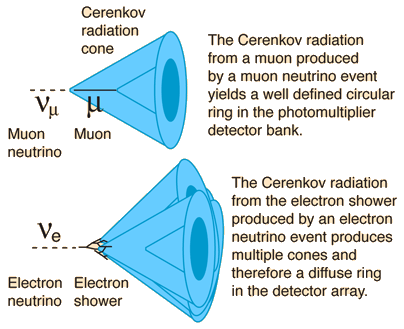
- Radio Detectors: The Radio Ice Cerenkov Experiment uses antennas to detect Cerenkov radiation from high-energy neutrinos in Antarctica. The Antarctic Impulse Transient Antenna (ANITA) is a balloon-born device flying over Antarctica and detecting Askaryan radiation produced by ultra-high energy neutrinos interacting with the ice below. The Askaryan effect is kind of a little brother of the Cherenkov Effect. The Askaryan effect is the phenomenon whereby a particle traveling faster than the phase velocity of light in a dense dielectric (such as salt, ice or the lunar regolith) produces a shower of secondary charged particles which contain a charge anisotropy and thus emits a cone of coherent radiation in the radio or microwave part of the electromagnetic spectrum. It is similar to the Cherenkov effect. It is named after Gurgen Askaryan, a Soviet-Armenian physicist who postulated it in 1962. The effect was first observed experimentally in 2000, 38 years after its theoretical prediction. So far the effect has been observed in silica sand, rock salt and ice.
Background Noise
Most neutrino experiments must address the flux of cosmic rays that bombard the Earth's surface. The higher energy (>50 MeV or so) neutrino experiments often cover or surround the primary detector with a "veto" detector which reveals when a cosmic ray passes into the primary detector, allowing the corresponding activity in the primary detector to be ignored ("vetoed"). For lower energy experiments, the cosmic rays are not directly the problem. Instead, the spallation neutrons and radioisotopes produced by the cosmic rays may mimic the desired physics signals. For these experiments, the solution pursued by organisations is to locate the detector deep underground so that the earth above can reduce the cosmic ray rate to tolerable levels.

This 15-foot Bubble Chamber, from the Fermi National Accelerator Laboratory in Batavia, Ill., is a neutrino detector relic of the 1970s, the early days of high-energy particle physics.
No comments:
Post a Comment